
AI Interaction Design: Why your product’s intelligence depends on who’s using it

In the last year, I’ve sat with enough AI product teams to notice the same question coming up again and again.

How do we make our AI feel smart?

It is not the right question. And the fact that so many teams are asking it explains why so many AI products feel generic, hollow, and oddly similar to each other despite running on entirely different models.

The right question is: How do we make our AI feel like itself?

Because AI interaction design is not about making the system appear intelligent. Rather designing the relationship between the system’s intelligence and the person on the other side of it. Get that relationship wrong and no amount of model capability will save the experience. Get it right and users will describe your product the way they describe people they trust.

I’ve thought about this problem from both sides. At Adobe, I spent years designing products used by millions of people with vastly different levels of expertise, expectations, and ways of working. What AI changes is that the product can now respond differently depending on the person using it. The experience is no longer something we simply design and hand over. It is something the system and the user shape together.

The thing nobody tells you about AI and user intelligence

There is a behaviour in AI systems that most product teams discover by accident and almost nobody designs for deliberately. AI interaction reflects the intelligence of the person using it.

A product leader who thinks in frameworks, asks layered questions, and challenges assumptions will pull sophisticated, nuanced responses from the same system that gives a first-time user something flat and generic. The model did not change. The intelligence of the interaction changed because the person changed.

I’ve experienced this myself. The more context, challenge and intent I bring into an AI interaction, the more useful the system becomes. That can feel like the AI is getting smarter. Often, the interaction is getting smarter.

This is not a bug. It is the fundamental mechanic of generative AI. But it creates a design problem that traditional UX has no answer for. In every product built before AI, the designer controlled the experience. A button does the same thing regardless of who presses it. An AI response does not. The experience is co-created, in real time, by the system and the user together.

Most teams respond to this by trying to educate users – writing better prompt suggestions, adding example questions, building onboarding that teaches people how to ask. That helps. But it treats the symptom, not the condition.

The deeper design challenge is this: how do you build an interaction model that elevates the experience regardless of where the user starts?

The Intelligence Interaction Model

Over the course of designing KAI, Kormoan’s own AI product for product strategy, and working on human-centred AI experiences for products like Lean-on, we arrived at a framework we now apply to every AI product engagement.

We call it the Intelligence Interaction Model. Three layers. Each one a design decision. Each one currently being made accidentally by most product teams.

Layer 1: The Mirror

The AI reflects the user. Design the reflection deliberately.

If the interaction is a mirror, your job as a designer is not to make the mirror smarter. It is to make the mirror slightly better than what it reflects, to elevate the quality of the interaction without requiring the user to already be an expert.

This is one of the things I find most interesting about designing for AI. The designer is no longer simply shaping what the user sees. We are shaping the quality of the thinking that can happen next.


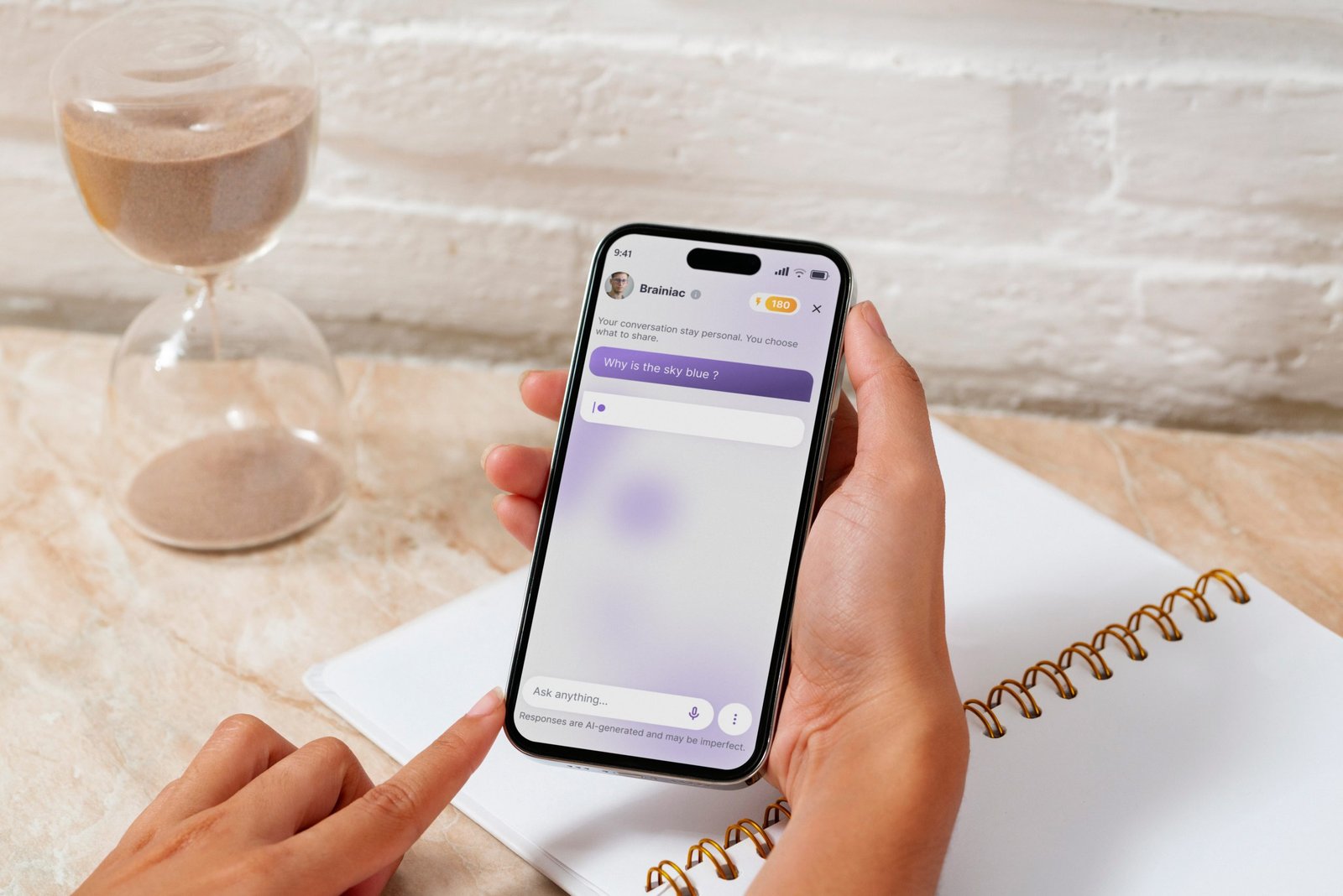
In practice this means: design the scaffolding around the AI, not just the AI itself. The suggested questions, the context prompts, the way you frame what the AI can do, these are not UX copy. They are interaction design decisions that determine the ceiling of your user’s experience.

When we designed KAI, we made a deliberate decision about what kinds of questions it would surface to users who did not yet know what to ask. For me, this was an important shift in thinking. We weren’t trying to teach people how to prompt an AI. We were trying to design an interaction that helped them think better without requiring them to become better at prompting first. Not generic prompts. Specific, strategically weighted questions that a senior product leader would ask. The AI reflects the user, but the scaffolding can raise the floor of that reflection.

Layer 2: The Model

You can constrain and shape how your AI behaves. Most teams don’t.

This is behaviour design. Not interface design, or prompt engineering but, Behaviour design. The decisions you make here determine whether your AI product feels like your product or like a thin wrapper around a generic model.

What does your AI believe? What will it never say? When does it push back and when does it defer? What is its vocabulary? Its confidence level? The problems it refuses to solve?

When we built KAI, these were not afterthoughts. KAI does not hedge everything the way generic AI assistants do. It takes positions. It challenges assumptions. It has a point of view on product strategy that reflects fifteen years of Kormoan’s work,  not because the model was trained on that work, but because the interaction model was designed to express it.

That character did not emerge. It was built. Deliberately. One constraint at a time.

Most teams skip this layer entirely. They connect to an API, tune a system prompt, and call it a product. Then they wonder why users describe the experience as useful but forgettable.

Layer 3: The Character

This is the hardest layer. And the most important.

Authentic AI characters cannot be faked at scale.

Users detect inauthenticity in AI personality faster than they detect it in humans because AI has no off days, no inconsistency, no accidental authenticity. When the character is performed rather than genuinely designed, it reads as hollow within a few exchanges. Users cannot always articulate why. They just stop coming back.

We encountered this directly when designing Lean-on, an AI-powered conversational platform built around deeply personal interactions. The product carries some of the most intimate conversations a user can have. The temptation in that context is to make the AI feel warm, empathetic, and emotionally attuned to perform those qualities.

We made the opposite choice. We designed the interaction model around restraint. The AI listens before it responds. It does not simulate emotions it does not have. It does not collect personal information until the user genuinely chooses to share it. Even the payment flow sits behind authentication, not behind a data wall. Every data touchpoint was designed to be understood, not extracted.

The result is an experience that users describe as surprisingly honest. Not because honesty was a feature. Because restraint and transparency were built into the character of the interaction from the beginning.

We challenged a common assumption about AI experiences: that making an AI feel more human necessarily means making it more emotionally expressive. I don’t think it does.

That is what an authentic AI character looks and feels like. It is not warm. It is not personality in the conventional sense. It is consistent between what the product claims to be and what it actually does in every interaction.

What this means for your product

These are the questions I now find myself asking much earlier in AI product work than I would have approached traditional UX.

One. What is the floor of the experience for a user who does not know how to use AI well? How does your scaffolding elevate that interaction?

Two. What is the character of your AI? Not its capabilities- its character. What does it believe? What will it never do? Have you designed those constraints explicitly or left them to chance?

Three. Is your AI’s character genuine or performed? If someone used your product for thirty consecutive days, would the character hold? Would it feel consistent and trustworthy or would it start to feel hollow?

These are not technical questions. They are design questions. And they are the questions that will determine whether your AI product builds lasting user relationships or becomes another feature that people try once and quietly stop using.

The product discovery process is where we typically start this conversation with clients before wireframes, before models, before any interface work. Because the interaction model is a product strategy decision, not a design execution decision. Getting it right at the beginning costs a fraction of retrofitting it later.

The question worth sitting with

Most AI products today are designed around what the AI can do. The ones that will matter in two years will be designed around who the user becomes when they use it.

That shift from capability to character, from features to relationship, is what designing for AI actually means. Not making the technology legible. Making the relationship between human and system worth having.

That is the work. And almost nobody is doing it yet.

Arushi Agarwal is Chief of Design at Kormoan, a design-led digital product studio building AI products, enterprise platforms, and digital experiences across India, the US, and the Middle East. She has spent 15 years designing at the intersection of human behaviour and technology, including AI products at Adobe.

If your team is designing AI interactions and wants a thinking partner…

Ask about us, your product, challenge, or idea...